The Myth of the Naturally Gifted Team
The naturally gifted team is a tempting myth. Clear roles and communication help talented people coordinate, share decisions, and do better work together.
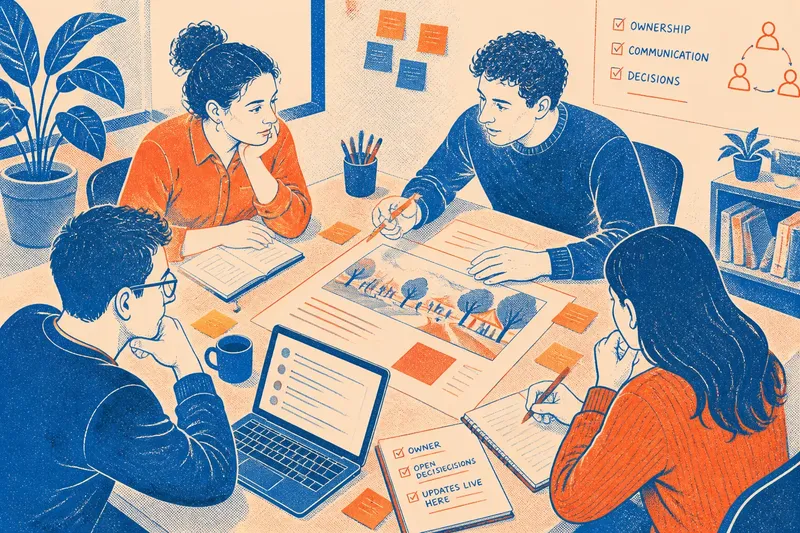
The most common mistake about a naturally gifted team is assuming talented people will coordinate without agreeing how. The cost is often quiet: duplicated work, missed decisions, and a capable person waiting for someone else to take the lead.
Collaboration is not a bonus that talent automatically brings along. It is work in its own right, shaped by clear responsibilities, useful communication, and room for different working styles. Those habits let people contribute without expecting everyone to think or act alike.
Why doesn’t talent automatically create a good team?
Skill describes what someone can do; it does not tell the group who owns a task, how disagreements will be handled, or when a decision is final. A team of confident specialists may each make reasonable choices that conflict because no one has agreed on the shared direction.
Imagination adds another wrinkle. One person may want to explore several concepts while another is ready to settle on one and refine it. Neither approach is a lack of ability, but without a conversation about the goal and the decision process, the difference can look like resistance.
What does a clear role look like?
A useful role is specific enough to guide action and flexible enough to allow initiative. “Own the first draft and bring open questions to the group” gives a clearer starting point than “help with the writing.” It also makes it easier for others to know where to offer input.
Roles need not be permanent titles. A team might name a coordinator for a meeting, a decision owner for a design choice, and a reviewer for the final copy, then change those assignments as the work changes. The important distinction is between contributing to a task and being accountable for moving it forward.
Say a small creative team is preparing a community workshop flyer. The designer assumes the organizer will provide final event details, while the organizer assumes the designer will make reasonable guesses. If they assign the organizer to confirm the details and the designer to lay out the approved copy, they can expect a draft with fewer unresolved blanks and a clear person to ask about each one.
How can a team make communication useful?
Useful communication answers practical questions: What changed? Who needs to act? What decision is still open? A shared note in Google Docs or a brief message in Slack can capture those points without turning every small task into another meeting.
Make the channel fit the work. A quick clarification may suit chat; feedback on a visual draft is easier when comments sit beside the relevant image or text. For a consequential choice, record the decision and its owner somewhere the group can find later, rather than relying on someone to remember what was said aloud.
Teams also benefit from agreeing on response expectations. A message that needs attention before a meeting should say so plainly; a nonurgent idea can wait in a shared document. This reduces the chance that one person interprets every notification as a demand while another assumes silence means approval.
How can disagreement stay productive?
Start by separating the shared goal from each person’s preferred route. Ask what the work must accomplish, then invite people to explain the concern behind their recommendations. “I’m worried the instructions are hard to scan” gives the group something to examine; “your version is wrong” mostly invites a defense.
Agree in advance who decides when opinions remain split. Depending on the task, that might be the person accountable for the outcome, a pair with relevant expertise, or the whole group after hearing each view. The method matters less than making it visible before a disagreement turns into a contest for influence.
It can also help to distinguish reversible choices from choices that are difficult to change. The team can try a low-risk wording option and review how it reads, while giving a major scope decision more deliberate discussion. That keeps debate proportional to what is at stake.
What should a team discuss before work begins?
Who owns each part of the work?
Name the person responsible for moving each task forward, even when several people will contribute. If ownership is shared, clarify who gathers input and who closes the decision.
Where should updates and decisions live?
Choose a common home, such as a shared project document or a specific Slack channel. Record final decisions there so people who missed a conversation can catch up without reconstructing it from scattered messages.
How will the team handle different working styles?
Ask what helps each person contribute: time to think before responding, a sketch before a discussion, or a written brief instead of a string of messages. Treat these as practical preferences, not as evidence that someone is less committed.
When should the group revisit its agreements?
Check in when the scope changes, a task repeatedly stalls, or people are unsure who has the next move. A short adjustment to responsibilities or communication habits can prevent a small mismatch from becoming a persistent source of friction.
How can quieter contributors be heard?
Fast discussion tends to reward people who think aloud, but speed is not the same as insight. Share an agenda or draft beforehand, invite written comments, and leave a pause before closing a decision. These small choices give people with different rhythms a fairer route into the conversation.
Do not make one person responsible for representing an entire perspective or identity. Instead, ask everyone what information the team may be missing, and make it safe to disagree with a proposal without questioning the colleague who offered it. Credit should also follow the actual contribution, including careful editing, synthesis, and coordination.
What should you do when collaboration starts to stall?
Look for an observable snag before deciding the problem is personality: two people may be editing the same file, a request may have no owner, or feedback may arrive after a decision is treated as settled. Name the snag neutrally, clarify the next action, and agree where the result will be recorded.
The myth of the naturally gifted team makes coordination sound like a test people either pass or fail. In practice, clear roles and communication give talent a way to work together without asking everyone to contribute in the same manner. A useful place to begin is the next shared task: make its owner, open decision, and home for updates easy to see.