A First Showcase That Leaves Space for Questions
Plan a first creative showcase around a clear purpose, an easy-to-follow display and unhurried conversation so visitors can meet the work and its maker.
The most common mistake in a first creative showcase is trying to display everything. Visitors get a crowded room, the maker gets a long setup, and neither has much room to talk. A small, deliberate selection gives people a clearer way into the work—and leaves the creator free to listen.
Think of a showcase as a chance to meet an audience, not a test of whether the work is finished. A few decisions made in order can make the gathering feel relaxed and purposeful, whether it takes place in a library meeting room, a school hallway, a studio, or a community center.
Choose what you want the gathering to make possible
Before choosing a venue or printing invitations, complete this sentence: “I want people to leave having…” The ending might be “noticed how I use color,” “understood what I’m learning to make,” or “asked about the choices behind these pieces.” A specific purpose helps you decide what belongs in the room.
Keep the aim welcoming rather than grand. A first showcase can help you hear what visitors notice, introduce a developing practice to a community, or give collaborators a chance to see work in progress. You do not need to prove that you have mastered a craft.
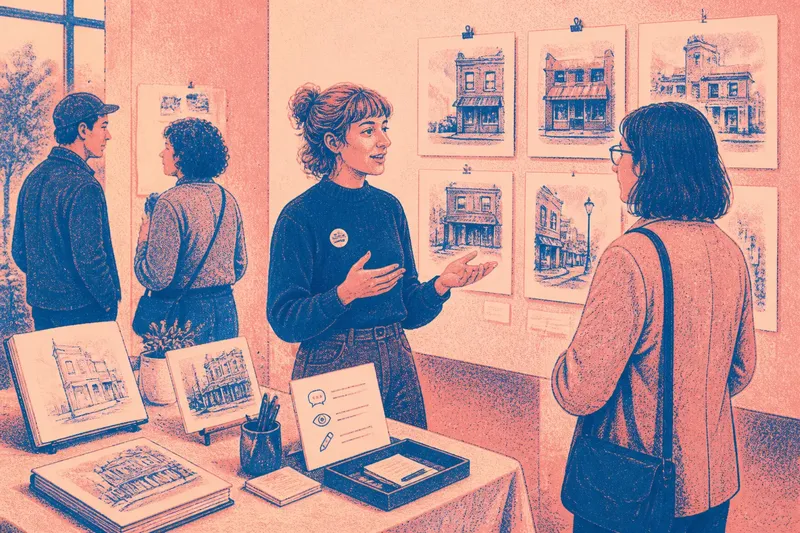
Say you have been making small watercolor studies of neighborhood storefronts and want to hear what details people recognize. That purpose suggests a modest selection of paintings, a simple way to identify each location, and time for visitors to share what caught their eye. It does not call for a wall covered with every sketch you have made.
Set a scale that leaves room to talk
Choose a space that suits the work and the kind of conversation you hope to have. A community room may offer tables and chairs; a library display area may be easier for passersby to find. Check access, lighting, setup time, and the venue’s expectations before settling on a date.
Then decide how much work the space can hold without making visitors hurry. A table can support a small set of objects, while a wall may call for a few related pieces with breathing room between them. If the work is digital, ask about a screen, headphones, power access, and whether visitors can comfortably gather around it.
Consider how people will arrive and move through the space. Leave a clear route to the display, provide somewhere to pause, and make it possible for someone to look without having to interrupt a conversation. A compact gathering can feel generous when no one has to compete for a place to stand.
Select work that gives visitors a way in
Choose pieces that help express your purpose, not just the pieces you consider most polished. A finished work can show where you are now; a sketch, draft, or material sample can make your decisions easier to discuss. If you include work in progress, explain what you are inviting people to notice rather than apologizing for what remains unfinished.
Arrange the selection so a visitor can make sense of it without needing a long introduction. You might group pieces by subject, material, or a question you have been exploring. A short title card can identify the work and offer a small point of entry, such as “Which detail draws your eye first?”
Keep supporting information brief and readable. A handwritten card, printed label, or QR code can provide context, but avoid making visitors decode a dense statement before they can look. If a piece needs a longer explanation, be ready to offer it in conversation rather than putting the entire story on the wall.
Make the work easy to encounter
Walk through the room as if you have never seen the work. Can you tell where to begin? Can you get close enough to notice details? Is there a place to set down a coat or notebook without blocking the display? These small observations often matter more than elaborate decoration.
Use only the materials that serve the work: table coverings, clips, easels, labels, or a simple sign at the entrance. Test the arrangement in the actual space if you can, especially if the display relies on natural light or a screen. For work that should not be handled, make that clear in a friendly, visible way; for touchable materials, say so plainly.
Plan for different ways of taking part. Some visitors may want to ask questions, while others will prefer to look quietly or leave a written comment. A small notebook, blank cards, or a shared digital document can offer another route into the conversation without making participation feel compulsory.
Build the schedule around unhurried conversation
Give the gathering a simple shape: a welcome, time to look, an optional short introduction, and open conversation. A brief welcome can explain why you chose the work and where visitors can find more context. Avoid filling every pause; people often need a little quiet before a question comes to mind.
Prepare a few prompts in case the room goes still. Ask what people noticed first, what they are curious about, or which material choice they would like to hear about. These questions invite attention without asking visitors to judge the work or offer advice they may not know how to give.
Decide in advance how you want to receive suggestions. You can say, “I’m glad to hear what stood out; I’m not looking for critique today,” or invite specific feedback on a question you are working through. A clear boundary can help both maker and visitor relax.
What should visitors know before they arrive?
How many pieces should I show?
Choose enough work to express the purpose, but not so much that visitors skim past it. A small, related selection often gives each piece room to be seen and makes conversation easier to begin.
Do I need to serve food or make a formal presentation?
No. A welcome, clear directions, and a comfortable way to view the work can be enough. Add refreshments or a short talk only if they suit the space, your energy, and the gathering’s purpose.
How can I invite questions without asking for praise?
Offer a prompt about a choice, material, or detail: “What would you like to know about how this was made?” That gives visitors something concrete to respond to without steering them toward approval.
What if I feel nervous during the event?
Keep a short welcome written down and ask a trusted person to greet visitors or help with practical questions. You can also take a quiet moment between conversations; hosting does not require constant talking.
Close the gathering with a useful next step
Before people leave, thank them and tell them what happens next if there is something useful to share. You might keep a sign-in sheet for those who want updates, provide a way to view more work, or simply invite visitors to leave a note. Make any follow-up optional and easy to understand.
Afterward, write down what visitors asked about, where they paused, and what felt comfortable or awkward to host. Treat those observations as clues for a future gathering, not as a verdict on the work. A first creative showcase succeeds when the work is easy to meet and the conversation has enough room to become its own small part of the experience.